Last week we did a DLO about primary and secondary sources if we were done. It is important to know what primary and secondary sources are because if you didn't know the difference between primary and secondary you won't know what was written at the time and what was written years later. We could of made a DLO with a partner and my partner was Alexia. Here is Alexia's blog link. Here is the DLO
Showing posts with label Who Are We. Show all posts
Showing posts with label Who Are We. Show all posts
Tuesday, 28 July 2020

Tuesday, 21 July 2020
Six Photographs
Today we started hurumanu 1, hurumanu 1 is called "Who are we". In this hurunamu we do Social Science and Reading. We are learning to understand the importance of history. We had to read a book called "Six Photographs". In the book there are photo from 1874-1876, 1880s, 1897, 1888 and 1894. After we read the story we had to go onto a doc and copy it and put it in our hur 1 folder then fill it out. I learnt that in the olden days it would take 10 seconds to take one photo and if they moved there would be a blur. Here is the work form the doc I did and a photo from the book.


Wednesday, 25 March 2020
Tangata Whenua
For the past weeks we had to learn about Tangata Whenua, Te Tiriti O Waitangi and Mahinga Kai. Last time we had to create a blog post about Te Tiriti O Waitangi and Mahinga Kai. We had to reads about the texts. Here are links to the videos 1.Link 2. Link .Here is some of the information I found from some of the videos I watched and the story.
Tuesday, 17 March 2020
Mahinga Kai
For the past weeks we had to learn about Mahinga Kai, Te Tiriti O Waitangi and Tangata Whenua. Last time we had to create a blog post about Te Tiriti O Waitangi. We had to reads about the texts. Here are links to the videos 1.Link 2. Link .Here is some of the information I found from some of the videos I watched and the story.
Friday, 13 March 2020
Te Tiriti O Waitangi
For the past weeks we had to learn about what group you are in. The group I am in is Te Tiriti O Waitangi. We had to read a book called "Te Tiriti O Waitangi" and made by Ross Calman and Mark Derby and illustrated by Toby Morris. Here is the link so you can listen to the book. Here is my work.
Thursday, 12 March 2020
Te Tirirti O Waitangi
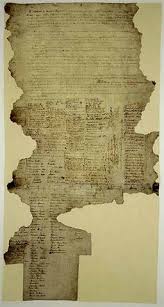
2 Days ago we watched a video about Te Tiriti O Waitangi the video was called "The Aotearoa History Show - Episode 4 | Te Tiriti o Waitangi" here is the link to the video (Link). Here is some facts that we got from the video.

Facts:
- The Māori population in late 1830's was down from 100,000 to 70-80,000.
- The two main reasons for the drop in population were Disease and War.
- The name of the main settlement in Aotearoa New Zealand at this time was Kororāreka or you might say Russell.
- The rangatira and missionaries were unhappy with what was happening in the town: British taking over, Parting, Unfair trades.
- The Te Tiriti O Waitangi was neglected because it was Buried, a lot of water was going on the paper, it was damaged and lastly it rotted.
- The British saw France as a threat because they were trying to colonise NZ.
- 500 chiefs from around the country signed the treaty.
- Tino Rangatiratanga means having your own way.
- The Māori believed that they would still be in control of their land.
- The methods the Māori used to beat the British in the Northern War were trenches, Flake walls, ambush and log walls.
Here are some photos
Tuesday, 3 March 2020
Early Encounters In Aotearoa
Last week we had to watch a video about "Early Encountears in Aotearoa". We got given a work sheet with questions on it so we could take notes. Here are the notes. Abel Tasman was the first European explorer to arrive in Aotearoa. Abel Tasman arrived in NZ in the 1642. Abel Tasman named this land Novel Zlanta (NZ). James Cook was the next explorers to arrive in NZ. James Cook arrived in NZ in the 1769. Tupaia was one of the names of the chief navigator helping the explorers. The Europeans gave NZ Clothes, Alcohol, Muskets, Pigs, Potatos, Ship Rats, Diseases. A Musket is a Gun. The Musket war ended in the late 1830s. The ratio of Māori to Pakeha in Tearoom in 1840 40 Māori I Pakeha.
Thursday, 13 February 2020
Tangata Whenua - Who Are We
For the past week we have been doing Hurumanu 1. today we had to watch a video about how that place we live in is called new Zealand and fill out a work sheet here are the questions.
1. Where did the Maori people arrive form? 2. How did they arrive in NZ. 3. What did they bring to NZ. 4. How did they get food. 5. Write 3 sentences about the Moriori people. 6. how did they prove that Maori and Moriori descended from the same people?. 7. Explain how the came to be extinct. 8. Why did the Maori choose to settle in the places they did. 9. In your work bank, write the meaning of whanau, Hapu and Iwi. 10. Explain the role of the rangatira - list at least 5 roles.
1. Where did the Maori people arrive form? 2. How did they arrive in NZ. 3. What did they bring to NZ. 4. How did they get food. 5. Write 3 sentences about the Moriori people. 6. how did they prove that Maori and Moriori descended from the same people?. 7. Explain how the came to be extinct. 8. Why did the Maori choose to settle in the places they did. 9. In your work bank, write the meaning of whanau, Hapu and Iwi. 10. Explain the role of the rangatira - list at least 5 roles.
Subscribe to:
Posts (Atom)